
Shaping young minds
The structures we choose to impose upon an infinitely complex world
It is true, as a flat-Earther may say, that your worldview ought to be based more on what you perceive around you than on what people say. The reason flat-Earth is a troll philosophy is that you can’t really perceive anything at all about the overall structure of the planet by looking around. It appears neither as a plane nor as a ball, because it doesn’t appear at all. You can’t see it.
When I look at the planet, I see a ground which I wish were sloped more steeply away from my foundation to shed water. I see some soil into which I have worked organic matter for the garden, and some that is still mostly hard packed clay. A block to the west, an irrigation ditch breeds mosquitoes. To the east a stream’s vigor responds to the mountain snowmelt. Farther I see the mountain range. Its descending and receding snow line tells a story about the coming weather, which the mountain itself influences. This most prominent geography determines the boundaries of tribal wilderness. It dictates where the roads lead and where they cannot. One remaining glacier, tucked into a valley on the north face of nearby peak, represents my dwindling hope for ecology in the decades to come.
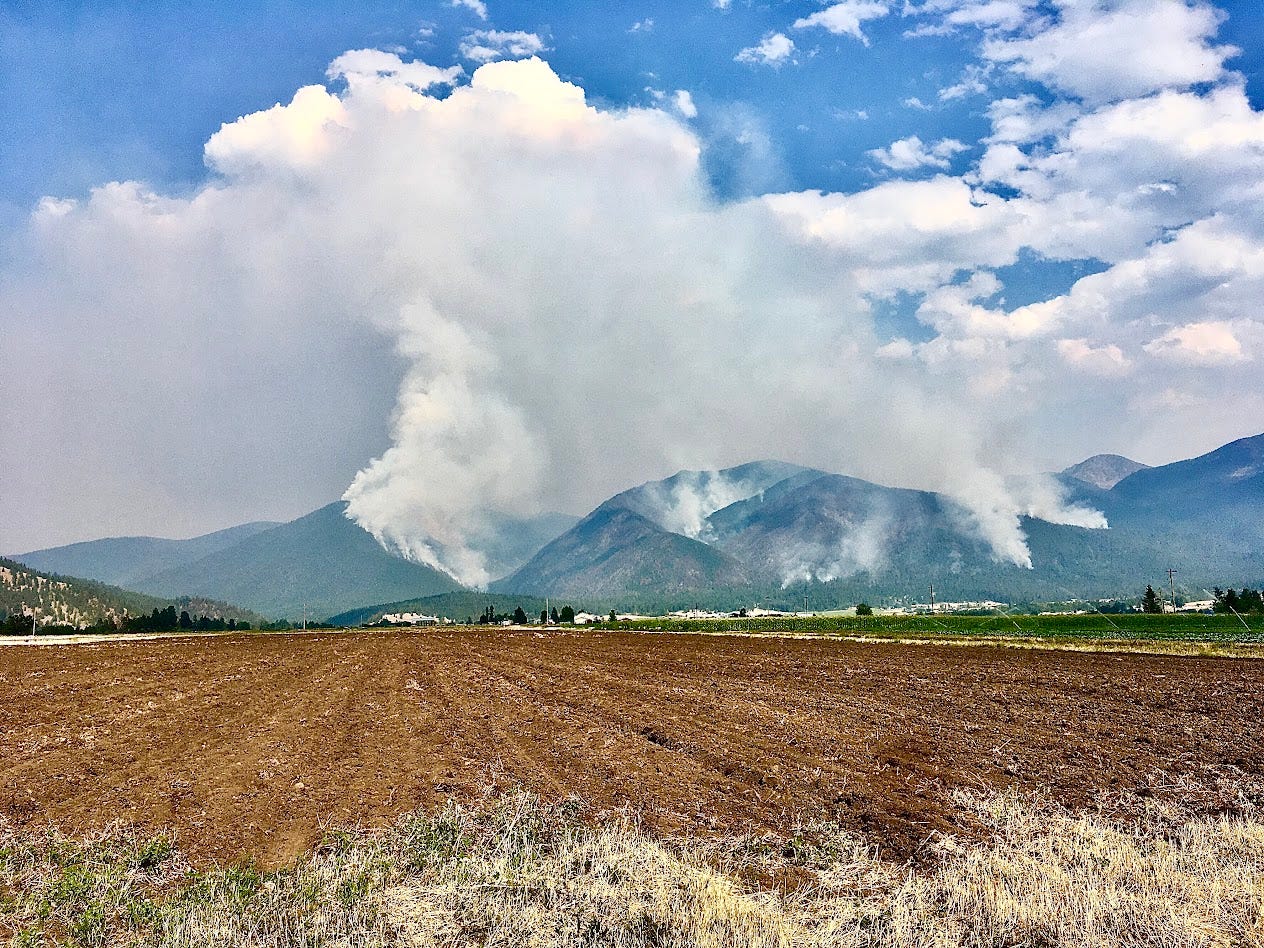
What I need to understand about the shape of the world has essentially nothing to do with its shape as visible from outer space. Particular specialties require understanding scales large or small that aren’t directly observable, but common knowledge really doesn’t.
It’s weird how quickly we want to get a kid thinking about atoms before they can fry an egg. You learn how a pilot navigates the globe before you learn how to navigate your own route to school. To the modern industrial human, seasons don’t matter, but knowing the mechanical explanation for why there are seasons has been made to matter. You’ve built a model of the solar system from plastic foam balls, but you don’t know what time sunset is. You know more about what a stegosaurus’s life may have been like than you know about the field of chickens next door. It’s neat you know what Coriolis force is; what direction is your prevailing wind?
Kids are already more inclined toward the memorization of dinosaur trivia than to picking up household skills and becoming intimately familiar with their local setting. Is a system for the promotion of paleontology needed among the age group for which random out-of-context facts are already valued as a currency? Everybody can see now that doing practical work is low class. It does not seem that young people need any “inspiration to go into STEM,” because by middle school it’s obvious enough already that these subjects are the path to ending up at a well paying desk job instead of getting stuck in food service.
Perhaps the classroom should dedicate itself to things that don’t matter because the proximity of direct reality is so constant and imposing that you’ll learn from it on your own without formal education. The irrelevance of dinosaurs would then be the reason in itself to study them. But it doesn’t seem true that children and their families will reliably follow some natural impulse toward attentiveness to surrounding. More often I see parents viewing it as their responsibility to shoulder the entirety of the practical household burden, so that the children can focus solely on academics. As education becomes our measure of the good, of who is smart and has a bright future ahead of them, unnecessary secondary facts have come to replace, rather than augment, primary knowledge.
The macroscopic shape of the planet, like every other fact that is real to experts but not real to us, is a fertile arena for toy battles because, apart from being able to click the right answer on an exam, there are no stakes. If this is a subject of great importance in your mind, it is only as a game, and you might as well pick whichever side seems more fun to play.
Think global, act local isn’t working because zooming out to global scale obliterates detail and yields only a featureless sphere (or oblate spheroid, or plane if you prefer). It manifests as “think global, do nothing” because we haven’t learned anything about the local environment upon which we are meant to act. Try thinking locally; maybe thinking about what you’re doing will help.